Be Careful About What You Sign… Or Don’t Sign

“I’m not a businessman,

I’m a Business, Man

Let me handle my business, damn”

– Jay-Z (“Diamonds (Remix)”)

Jay-Z said it best; that’s probably why he’s one of the greatest musicians of our time. So many artists these days claim to be “about their business” or call themselves “businessmen,” but in reality, what do most of these guys really know about business? Do they know their tax ID number? Did they know which forms and licenses to obtain before starting a label? Most importantly, do they know the difference between a partnership and an LLC? The answer to these questions is probably not many.

Meet Pill. The Atlanta-based rapper signed (or not… more on that in a minute) to Rick Ross’ Maybach Music Group (MMG) via Warner Bros. Records has recently expressed his frustration with both labels due to the lack of promotion of his music. For those who don’t know, most artists generally make these claims. In reality, whose fault do you think it is; the artist or the label? Let’s assume the answer is the artist. Even though you think your music is good, or relevant, it’s probably not if nobody is attracted to it. Additionally, you should probably seek new management and establish a team who will guide you in the right direction. (See my article Hip-Hop’s New Business Model for more information)

Back to Pill. In his defense, he did have a single in 2009 that gained him attention from the labels, but it ultimately didn’t do that well. Once Warner Bros. picked him up, they placed him with Rick Ross in hopes of advancing his career. This worked for a few months (beginning February 2011), and Pill was featured on the crew’s debut album, MMG Presents: Self-Made Vol. 1 (Released in May 2011), but after that, you rarely saw him with the rest of the team. To those who follow Ross’ career this is odd since Meek Mill and Wale, also new acquisitions to Maybach Music, are always seen with the MMG team.
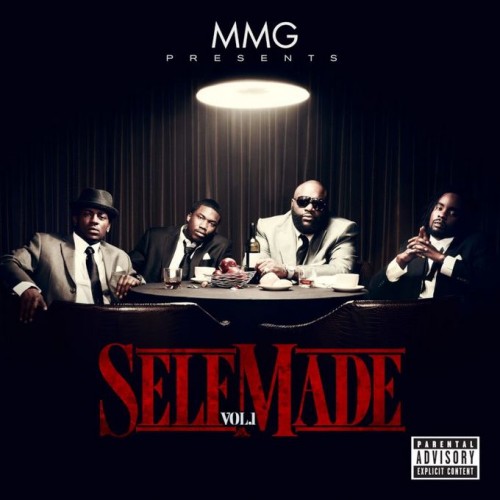
L to R: Pill, Meek Mill, Rick Ross, Wale

Fast forward to January 2012. Pill takes to his Twitter page to vent his frustrations with all parties involved. First bad move. The following day, he told MTV News that he doesn’t speak with Rick Ross and was actually never signed to MMG!!! Second bad move and most likely a lie.

Good luck ever hearing a song from Pill on your TV or radio in the future!

There are so many reasons as to why Pill messed up by deciding to speak his mind. But instead of writing out the laundry list of reasons, I’ll make it short and simple because ALL up and coming artists should follow this advice:

  • READ, READ, READ – contracts are more than just a piece of paper, they are your life
  • Understand the business, before you enter the business
  • DO NOT shout out your “Jewish lawyer” in your songs just because it sounds cool, ACTUALLY USE HIM!
  • Respect those who have given you an opportunity and remain humble
  • If you have a problem with your label, tell them, not your Twitter followers
  • Focus on the music and your brand, let your management/lawyer/accountant do the rest
 Just because your able situation may be bad doesn’t mean you don’t have the opportunity to make it right. Longevity is key, get to work and stop complaining!

… And Pill, being signed to MMG doesn’t seem to be too bad if Wale had the #2 album in the country in November and Meek Mill is one of the most talked about artists in hip-hop.

Update: Popular Memphis rapper Yo Gotti is doing the same thing!

“Holla at my Jewish lawyer

To enjoy the fruit of lettin’ my cash stack.”

– Jay-Z (“No Hook”)

Best of 2011

With one more day left of 2011, I would like to share some of my personal (music related) highlights of the year. See you all in 2012!

Ryan Leslie concert, Summer 2011 - New York, NY

Nelly Interview at Cornell University - May, 2011

Kanye West @ Big Sean Album Release Party - New York, NY

G-Unit Records, January 2011

50 Cent signs DJ Pauly D to G-Unit Records (Nov. 2011) - I designed the shelves and placed the awards behind them

Ace Hood – “Blood, Sweet, Tears” Listening Session – Jungle City Studios, New York, NY

Interviews with Mac Miller, Fred The Godson, Big K.R.I.T., Nelly & Jadakiss (See them in the interviews tab)

What’s In A Name?

“Yo police blitzed the crack game


Drug alias switched to rap names


Fat chains attract fame


Innocent wigs get split when gats flame”

– Ali Vegas (“Theme of New York”)

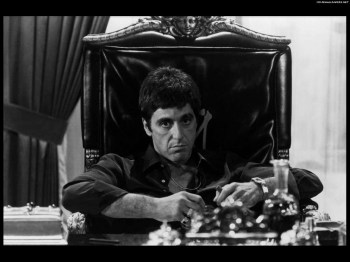
Al Pachino as Scarface

Who would have ever thought that one of hip-hops most talked about artists in 2011 would be a rapper named Tity Boi? With over 30 guest features, 150+ shows, and a hit single “Spend It,” Tity Boi has became a household name within the hip-hop community. Even though this is a great accomplishment for the former protégé of hip-hop superstar Ludacris, Tity Boi had to change his rap name in order to take his career to the next level. Enter 2 Chainz. The self-proclaimed “Codeine Cowboy” now has the ability to capitalize off of his 2011 success with his new name and solo[1] endeavors. Whether 2 Chainz is seeking fame or fortune, the real question is this: Does a grown man really want people calling him Tity Boi?

Name changes have almost become essential within the hip-hop community. Puff Daddy to P. Diddy to Diddy, Ol’ Dirty Bastard to ODB, Mos Def to Yasiin, rappers always looking to reinvent themselves for various reasons. With an overabundance of rappers who have continuously named themselves after drug kingpins, mobsters, and the dangerous surroundings they grew up around, we are starting to see a change in those who have realized that these names will not allow them to reach the success they have always strived for.

Rappers with Drug Affiliated Names           Rappers with Mobster Affiliated Names

Tony Yayo                                                          Freeway

French Montana                                                 Rick Ross

Peedi Crakk (changed to Peedi Peedi)             Capone-N-Noreaga (Changed to CNN)

Pusha T                                                              Irv Gotti

Scarface                                                             Machine Gun Kelly

Rappers with Names Associated to Violence

Cory Gunz (Named after his father, rapper Peter Gunz)

Ghostface Killah

Uncle Murda

Killer Mike

40 Glocc

Mack 10

Gunplay

C-Murder (Currently serving a life in prison term)

In Steven Levitt and Stephen Dubner’s popular and bestselling book Freakonomics, the author’s devote an entire chapter on the socioeconomic patterns of naming children, particularly within the African American community. The idea between correlation vs. causation can be compared to the names rappers choose for themselves. In the book, we establish the relationship between predicting a child’s success and his or her parent’s socio-economic characteristics. Ultimately, the author’s conclude that the given name does not matter; it’s the characteristics of the parents that are more important. Unfortunately, we can infer based on the stories that artists depict that their parents were addicted to drugs, poor, abusive, or completely out of their lives.

Most hip-hop artists only know about the things they grew up around. That’s their comfort zone and why they always talk about it. Therefore, why wouldn’t we expect them to incorporate the name of a gun or elements of violence in their image?

The moral of the story is this: name and image are everything in the entertainment industry. You create your own destiny so choose it wisely.


[1] 2 Chainz is a member of hip-hop group Playaz Circle; known for hit single “Duffle Bag Boy” in 2007

Maintaining Independence: Hip-Hop’s New Business Model

This past semester I took a course titled Hip-Hop Cultures. Now of course your first reaction is, “You’re paying to take a college course on hip-hop?” As we learned, the title was the professors trick to reel us in, but in the end it was worth it (although I didn’t agree with most of the course, another story). For our final project we had to incorporate the main elements of hip-hop and write about them based on course material, personal experience, etc.

For my project, I chose to write about one of the new trends in music. Independent record labels and independent artists are at the forefront of the industry, and are becoming the most successful. Since the paper is 19 pages, I have attached it below. Some of the artists I focused on include Mac Miller, Tech N9ne, Wiz Khalifa, and Cash Money Records.

Enjoy!

Hip-Hop’s New Business Model